
How Old Am I? You’ve probably answered that question a thousand times. It seems simple, right? Just do the math: birth year minus current year. But what if I told you that’s only scratching the surface? There’s a whole world hidden behind that number. Because let’s face it—age isn’t just about digits. It’s about how you live, how you feel, and how you grow.
You might wake up feeling 80 after a bad night’s sleep, then laugh like a teenager two hours later. You might be 30 on paper, but your soul’s clock tells a different story. Age is a slippery thing. It bends, shifts, and plays tricks on us. And when you ask, “How old am I?” you’re really asking, Where am I in life? What stage am I living through? That’s the real question.
In this article, we’ll unpack the many versions of age. Chronological. Biological. Mental. Emotional. Social. Each one holds clues about who you are and who you’re becoming. Whether you feel stuck, ageless, or out of sync with your number, you’re not alone. There’s insight here for you.
And maybe, just maybe, you’ll walk away not just knowing your age—but owning it.
What Does “How Old Am I?” Really Mean?
At face value, it’s simple math. You were born in a certain year, and time passed. But does that number truly explain who you are today? That’s where things get complicated. And a little fascinating.
There are several layers to age. They overlap, contradict, and constantly evolve. It’s possible to be chronologically 45, yet biologically 35, mentally 60, and emotionally stuck at 19. That disconnect isn’t rare. In fact, it’s more common than people admit.
Age carries assumptions. People expect certain things of you depending on how old you are. But what if you’ve lived through more than most people your age? Or less? What if your timeline zigzags instead of running straight? Then what?
The question “How old am I?” can be answered in different ways:
- Chronological: Your calendar age.
- Biological: How your body is really doing.
- Mental: How your brain thinks.
- Emotional: How you handle feelings.
- Social: How others interpret your age.
Each of these plays a role in shaping your identity. And the tension between them? That’s where real self-awareness begins. Because you’re not just living in years. You’re living in experiences. And those add up differently.
Chronological Age: The Surface Level Truth
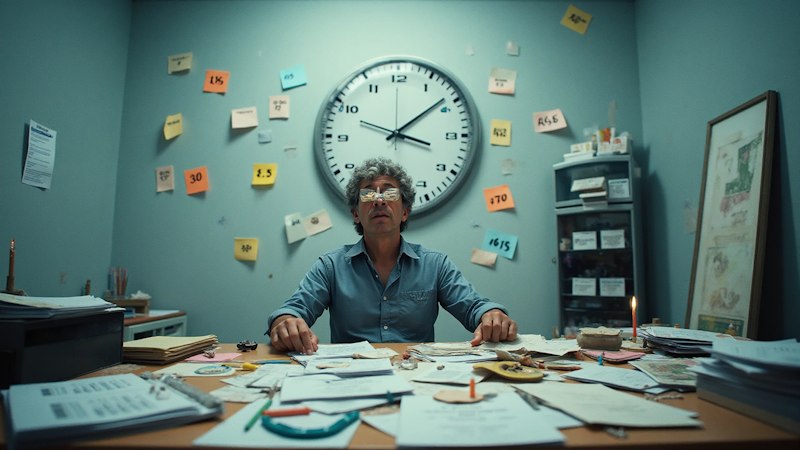
Chronological age is the easiest one to grasp. It’s your “official” age—the number that shows up on your ID, the form at the doctor’s office, or your driver’s license. It’s how society slices time: by birthdays.
That number decides a lot:
- When you can drive
- When you can vote
- When you can legally drink
- When you’re allowed to retire
But here’s the thing—chronological age doesn’t measure wisdom, resilience, or joy. It only counts years. And we both know that’s not enough. You can live 40 years without ever being truly alive. Or you can live deeply in just 20.
Still, the number is necessary. It provides structure. Systems rely on it. It’s like a timestamp. But it’s flat. It doesn’t reflect how those years were spent. It can’t show how much you’ve healed. Or hurt. Or changed.
So while your chronological age may answer the question on paper, it’s often the most misleading version of the truth. Knowing your age this way is like reading a book’s title and pretending you understand the plot. You know the cover, but not the chapters.
Biological Age: What Your Body’s Saying
Biological age looks under the hood. It measures how well your body is functioning compared to the average. And that might surprise you.
You could be 45 chronologically but have the blood pressure, metabolism, and cardiovascular fitness of a 30-year-old. Or the opposite. That’s because biological age is shaped by how you live, not just how long you’ve lived.
Factors that influence biological age:
- Nutrition and diet quality
- Sleep habits
- Exercise frequency
- Stress levels
- Genetics and inflammation markers
This version of age is powerful because it shows you where you can intervene. You can’t undo your birth year, but you can adjust your habits. Small changes today can reduce your biological age tomorrow.
Modern science even offers tests to estimate your biological age. They use blood, saliva, or DNA to give you a number. But you don’t need a lab to know where you stand. Tune into your body. Are you tired often? Recovering slowly? Energetic? Mobile?
Your body speaks—and it’s more honest than your birth certificate.
So if you’re asking “How old am I?” maybe the better question is: How well am I aging?
Mental Age: The Mind Behind the Years
Mental age has nothing to do with IQ or test scores. It’s about how your brain interprets the world, processes ideas, and adapts to change. It’s your inner dialogue. Your curiosity. Your logic. Your problem-solving.
Ever met a 12-year-old who thinks like an adult? Or a 45-year-old who still clings to high school drama? That’s mental age in action. It’s influenced by education, life exposure, trauma, and reflection. But it’s not static.
You can grow your mental age by:
- Reading books that challenge you
- Listening to people with opposing views
- Asking better, deeper questions
- Staying open to unlearning
Mental age is a dance between knowledge and perspective. It’s not about being “smart” in the traditional sense. It’s about seeing patterns. Anticipating consequences. Making decisions with both your head and your heart.
Philosopher Marcus Aurelius once wrote, “The soul becomes dyed with the color of its thoughts.” If your thoughts are sharp, calm, and grounded, your mental age reflects that. If they’re scattered or reactive, well… you get the picture.
You might not control your chronological age, but you absolutely steer your mental growth.
Emotional Age: How You Handle Feelings
Now things get real. Emotional age is often where the biggest gaps show up. Because life doesn’t hand out emotional maturity with time. You have to earn it.
Some people grow emotionally through hardship. Others stay stuck in childhood patterns well into adulthood. And emotional age often reveals itself during stress, conflict, or intimacy.
Key traits of emotional maturity:
- Self-regulation (not reacting impulsively)
- Empathy for others
- Accountability for mistakes
- Healthy boundaries
If you find yourself repeating the same emotional mistakes—ghosting people, snapping in anger, avoiding hard conversations—you may be emotionally younger than your actual age. That’s not shameful. It’s just feedback.
Good news: emotional age can grow, and usually does with intentional effort. Therapy helps. So does journaling, mindfulness, and honest friendships. Anything that helps you see yourself clearly and respond with kindness counts.
Because emotional maturity doesn’t mean being perfect. It means being present with your emotions without letting them wreck the room.
Want to feel more grown-up? Work on your emotional patterns. They age you more than any wrinkle ever could.
Social Age: How the World Reads You
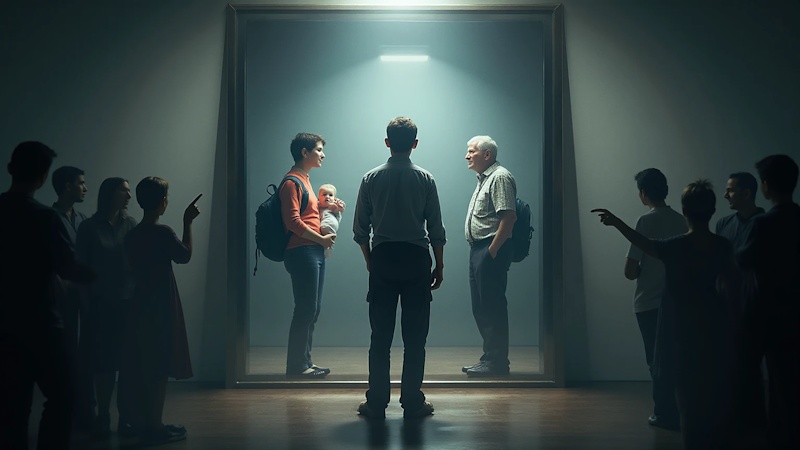
Social age is where perception meets expectation. It’s shaped by the roles you play, the way you dress, the words you use, and even how you walk into a room. It’s how the world decides how old you seem.
And it doesn’t always match reality.
You could be 60 but dress like you’re 30. Or 22 with the posture and speech of someone twice your age. You might be a young parent and get treated like an elder. Or a retiree with a startup and get labeled as “young at heart.”
Your social age is influenced by:
- Cultural norms
- Generational identity
- Parenting status
- Career path
- Public behavior
Why does this matter? Because the world often treats you according to your social age. That can be empowering or limiting.
If people assume you’re “too old” or “too young” to do something, it shapes your experience. But here’s the twist: social age is flexible. You can reinvent it. Shift your language. Change your circle. Break norms.
Ultimately, your vibe tells people how to read you. So if your vibe doesn’t match your goals? Time for a rewrite.
Why You Might Feel Older or Younger Than You Are
There’s no rule that says your internal age must align with your external one. In fact, most of us carry mixed signals. Some days you feel 19 again. Other days, 80 hits you hard before breakfast.
So why the disconnect?
You might feel older because:
- You’ve experienced trauma or loss early in life
- You’ve been carrying responsibilities beyond your years
- You’ve stopped engaging in joy or curiosity
You might feel younger because:
- You stay physically active and mentally curious
- You surround yourself with youthful energy
- You resist societal timelines or expectations
Sometimes feeling “older” means you’re exhausted. But sometimes it means you’re wise. Feeling younger might mean playfulness—or escapism. That’s why self-awareness matters.
The truth is: everyone walks their own time trail. Comparing yourself to someone else’s age journey is like comparing movies with different plots. Their path isn’t your measure.
So next time you feel “off,” don’t panic. Ask why. Your feelings about age are feedback. They’re pointing you toward something that needs attention, joy, or healing.
Listen. Then act accordingly.
Can You Change Your Age (Sort Of)?
You can’t change your date of birth. But you can absolutely change how you age. That’s the part most people miss. Aging isn’t a curse—it’s a canvas. You shape it with your habits, your mindset, and your choices.
Want to feel younger? Shift your life with purpose:
- Move your body every day, even if it’s just stretching.
- Laugh often. It reduces cortisol and boosts endorphins.
- Learn something new. Novelty stimulates brain growth.
- Connect with people who inspire and energize you.
Want to age gracefully? That requires internal work:
- Forgive more, cling less.
- Sleep better. Seriously, protect your rest.
- Let go of toxic patterns. They age you faster than cigarettes.
You may not control all the circumstances, but you do control how you show up in them. If you want to shift your experience of age, start today. Don’t wait for the calendar to catch up.
You have more power than you think.
Aging well isn’t about hiding from time. It’s about walking with it like an old friend.
Tools to Explore Your True Age
Want to know how old you really are—beyond numbers? Try some self-checks. You don’t need fancy tests. Just honest answers.
Start here:
- What habits age me mentally, emotionally, or physically?
- What lights me up and makes me feel young?
- When do I feel most aligned with myself?
- Where am I holding on to outdated versions of myself?
If you’re into tools and apps, there are online “biological age calculators” and mental age quizzes. They can be fun, even if not perfectly accurate. Use them as prompts, not verdicts.
Other tools:
- Journaling: Capture your inner voice and notice patterns.
- Therapy: Explore emotional age and root causes.
- Mindfulness apps: Help you observe rather than react.
The goal isn’t to prove how old you are. It’s to understand how you’re living.
Truth ages well. So be honest with yourself, even if the answers are uncomfortable. That’s where growth begins.
And maybe, clarity too.
The Philosophy of Age
Time is weird. It stretches, shrinks, and distorts based on emotion, memory, and presence. A day can feel endless. A decade can vanish. So what does that say about age?
Philosophers have wrestled with this for centuries. Alan Watts once said, “No valid plans for the future can be made by those who have no capacity for living now.” That’s the paradox: to age well, you must stop obsessing over age.
Being truly present makes you timeless. Think of children lost in play. Artists in flow. Grandparents telling stories like they happened yesterday. These moments defy time.
So maybe age isn’t a number but a rhythm. And each person has their own. Some sprint. Some drift. Some bloom late, and some burn out early. There’s no single tempo.
What matters isn’t how long you’ve lived but how deeply. Have you asked good questions? Loved hard? Learned from pain? If so, you’ve aged well—regardless of your number.
So if you’re wondering, “How old am I?” also ask: How awake am I to the moment I’m in?
That answer might surprise you.
Final Thought: Own Your Age, Don’t Chase It
Age isn’t the enemy. Fear is. Regret is. The belief that you’re too late or too early—that’s what steals time.
You’re not too old to try something new. You’re not too young to be wise. Your timeline isn’t broken. It’s yours. And it’s valid.
So the next time someone asks, “How old are you?” you can give them the number. But give yourself the deeper truth:
- How well am I living?
- What have I survived?
- What am I becoming?
Because age isn’t just about the years you’ve had. It’s about how many lives you’ve lived within them.
And you? You’re right on time.
SHARE THIS